19/05/2026
News
Weaving Interculturality Together
Weaving Interculturality Together
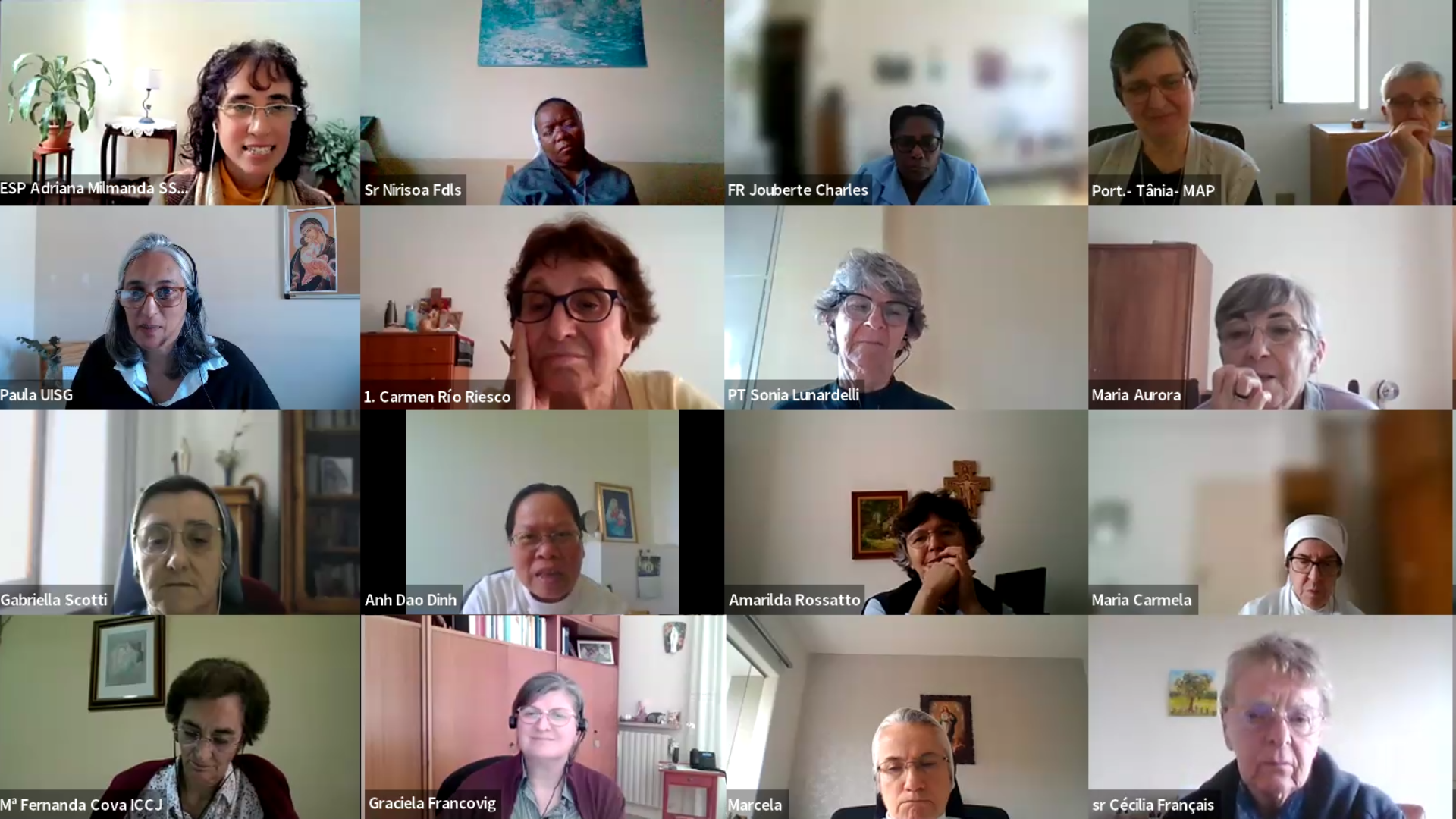
From May 6 to 8, more than 400 sisters participated online in the fourth module on “Synodal Leadership with Deep Roots”: a space for reflection, listening, and shared learning that brought together women religious leaders from different parts of the world.
The session was marked by the conviction that building intercultural communities depends not only on human abilities or governance strategies, but also on the grace of Jesus, who constantly calls us to live the Gospel through communion, listening, and mutual love. Only when deeply rooted in the certainty of Christ’s love can communities become true signs of the Kingdom, capable of welcoming diversity, healing wounds, and weaving fraternal relationships among cultures, generations, and peoples.
The formation was animated by Sr. Adriana Milmanda, SSpS, who offered reflections and tools on fundamental themes such as the basic definitions of interculturality, the relationship between charism and culture, and ways of being intentionally intercultural in daily and community life. She also explored the links between synodality and interculturality, emphasizing the need to build communities capable of living diversity as part of their gift and mission.
During these three days, participants deepened their understanding of the challenges and opportunities that interculturality presents today for consecrated life and for the exercise of truly synodal leadership. In a global context marked by rapid change, human mobility, and cultural diversity, intercultural formation is increasingly becoming an essential priority for all formation processes within congregations.
The dialogues highlighted the need to maintain an open, humble, and flexible attitude, capable of being transformed through encounters with other people, cultures, generations, and ways of understanding life. Welcoming the youth cultures of our time was also presented as an urgent challenge for all members of congregations, who are called to listen deeply to new generations in order to walk together with them.
The importance of recognizing prejudices, stereotypes, and forms of discrimination that are always present — often unconsciously — within our relationships, congregational history, and community structures was also emphasized. Interculturality therefore requires an ongoing process of awareness, personal conversion, and community restructuring that allows differences to be lived not as threats, but as richness.
In this perspective, participants reflected on the need to learn how to adapt to change and to develop human and spiritual capacities that foster more open and reconciled relationships. Conflict resolution — inevitable as it is — was presented as a fundamental skill for intercultural community life and synodal leadership. Another challenge is welcoming, accompanying, and giving space to minorities; this too is part of evangelical witness and of the commitment to build communities where every person may feel recognized, heard, and valued in their uniqueness.
Another significant aspect was the reflection on learning new languages. It was highlighted how learning a new language facilitates communication and is essential for communion, while also provoking a neurological change and an inner openness that help people better understand other cultures and ways of thinking.
Throughout the session, a strong conviction emerged that interculturality reflects the new synodal paradigm of leadership today: a leadership based on mutual listening, co-responsibility, participation, and the ability to move forward together in diversity. Thus, interculturality is not merely an organizational necessity, but a necessary and urgent response to the signs of the present times, becoming a true mission of consecrated life today.
The experience concluded by reaffirming the commitment to continue promoting formation processes that prepare consecrated persons to live and lead intercultural communities that are open to dialogue, capable of welcoming differences, and able to respond creatively to the challenges of the contemporary world.
Related News
 News
Monday 22 June 2026
Formation of Formators: A rekindled flame that burns with greater intensity
Read
News
Monday 22 June 2026
Formation of Formators: A rekindled flame that burns with greater intensity
Read
 Other News
Thursday 18 June 2026
International Leadership Development Programme for General Councils
Read
Other News
Thursday 18 June 2026
International Leadership Development Programme for General Councils
Read
 News
Monday 08 June 2026
Formation of Formators: Inspired to take the challenges as opportunities to grow in hope, faith, and charity
Read
News
Monday 08 June 2026
Formation of Formators: Inspired to take the challenges as opportunities to grow in hope, faith, and charity
Read
 News
Monday 20 April 2026
UISG Intercultural Journey in Asia
Read
News
Monday 20 April 2026
UISG Intercultural Journey in Asia
Read