15/04/2026
News
3rd Week of Easter: Transformed by Hope
3rd Week of Easter: Transformed by Hope
“Transformed by Hope” is proposed as a space of listening and discernment on the Sunday Gospels that accompany our journey.
This initiative is situated within the horizon opened by the Jubilee and seeks to extend its grace, continuing to live our vocation as pilgrims of hope amid the challenges of our time.
Each week, in the light of the Word of God, we contemplate an aspect of the conversion to which we are called, allowing ourselves to be guided by the Spirit.
For the Third Sunday of Easter, the Gospel reflection is accompanied by the reflection of Sr. Martha Gabriela Hernández Martín del Campo, Superior General of the Missionary Clarisses of the Most Blessed Sacrament and Delegate of the Rome Constellation.
From discouragement to hope, from sadness to shared mission
The Gospel of this Third Sunday of Easter is an exemplary passage that shows us how the Risen Lord is present today in our life of faith, in our consecrated life, and how we can encounter Him and never separate ourselves from Him. In this account of the Risen Lord’s appearance to the disciples of Emmaus, it is very important to consider listening to our brothers and sisters in their circumstances and listening to the Lord who proclaims His Word, as well as contemplating His Face as He breaks the bread for us and gives Himself.
It is very sad to return from a funeral, especially when it is someone very close and dear. Suddenly one experiences emptiness, as if everything has ended, and sadness fills the heart. This is how the two disciples were returning to Emmaus (Lk 24:13), wishing to distance themselves from the community, from the cross, from everything that spoke of pain and failure.
But already on the road to Emmaus, Someone draws near quietly (v. 15). They are no longer two, but three. The stranger walks with a slow and heavy step, listens to them say, “we had hoped, we believed, but no… but no…” (cf. vv. 21, 24), and asks questions, shows interest… Is He the only one who does not know what has happened in Jerusalem? Does He live in illusions or is He completely unaware of “reality”? Why is He not sad like us? Why does He begin to explain the Scriptures with such enthusiasm and strength? (vv. 25–27)
From discouragement to hope
Almost unnoticed, a light and warmth begin to enter their hearts, and they feel so at peace with this Person that they dare to invite Him to stay with them. Evening falls, hope seems to fade, but “stay with us,” and He entered to remain with them (v. 29).
Sitting at table, blessing and breaking the bread to give it to them became the unmistakable sign to recognize the Lord and to be transformed by the Risen Jesus (v. 31). Suddenly they no longer see Him, but the Encounter has transformed them. A new direction begins: they no longer move away but return to the community; they run together. Sadness is transformed into joy and discouragement into hope.
From sadness to a shared mission with joy
A need arises to share, to proclaim the Good News to their brothers and sisters. Their steps become light; isolation turns into communion and sadness into a shared mission. “They recounted what had happened on the way and how they had recognized Him in the breaking of the bread” (v. 35).
This Word of the Lord illuminates in a special way our consecrated life as a transforming hope. Pope Leo XIV, in the Catechesis of September 24, 2025, referring to this passage, said: “…it is not enough to say or believe that Jesus died for us; it is necessary to recognize that the fidelity of His love has sought us where we ourselves were lost, where only the power of a light capable of piercing the darkness can reach.”
It is Jesus who takes the initiative, who has called us to follow Him, who walks with us and invites us to share His same feelings and attitudes: to walk with others, with those we meet each day, to sow hope through a kind word, attentive listening, and walking alongside those in need. To be joyful signs when everything seems to collapse and we receive only messages of war, destruction, and selfish interests, because we know that Someone walks with us, enters our lives, and remains forever. He sends us on mission in communion.
Faced with this beautiful text, we may ask ourselves:
- Do I take the initiative to approach others with discretion and respect in order to listen?
- Through my attitudes of closeness and simplicity, do I convey a word of hope to others?
- Do I share the joy of having encountered the Risen Lord who lives in me and I in Him?
Related News
 News
Thursday 16 April 2026
A Light That Crosses the Centuries: 750 Years of Mission
Read
News
Thursday 16 April 2026
A Light That Crosses the Centuries: 750 Years of Mission
Read
 News
Sunday 12 April 2026
Transformed by Hope – Divine Mercy Sunday: “Peace be with you”
Read
News
Sunday 12 April 2026
Transformed by Hope – Divine Mercy Sunday: “Peace be with you”
Read
 Other News
Wednesday 01 April 2026
The Anna Trust Foundation Announces the Awardees of Its Inaugural Grant Cycle
Read
Other News
Wednesday 01 April 2026
The Anna Trust Foundation Announces the Awardees of Its Inaugural Grant Cycle
Read
 News
Monday 09 March 2026
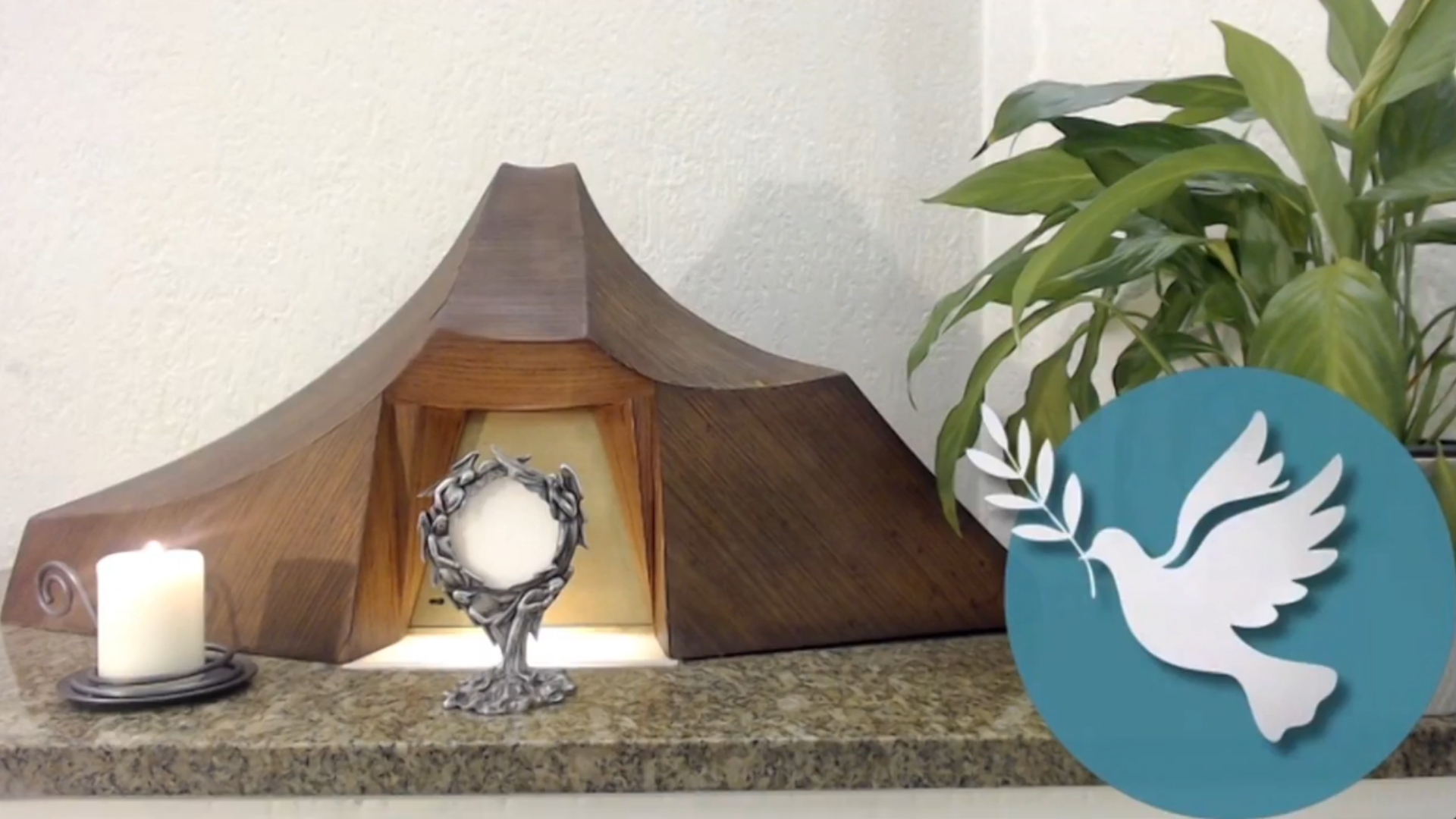
A Cry for Peace from Around the World: Thousands of Sisters in Prayer with UISG
Read
News
Monday 09 March 2026
A Cry for Peace from Around the World: Thousands of Sisters in Prayer with UISG
Read