24/03/2026
News
What is the call for Consecrated Life today?
What is the call for Consecrated Life today?
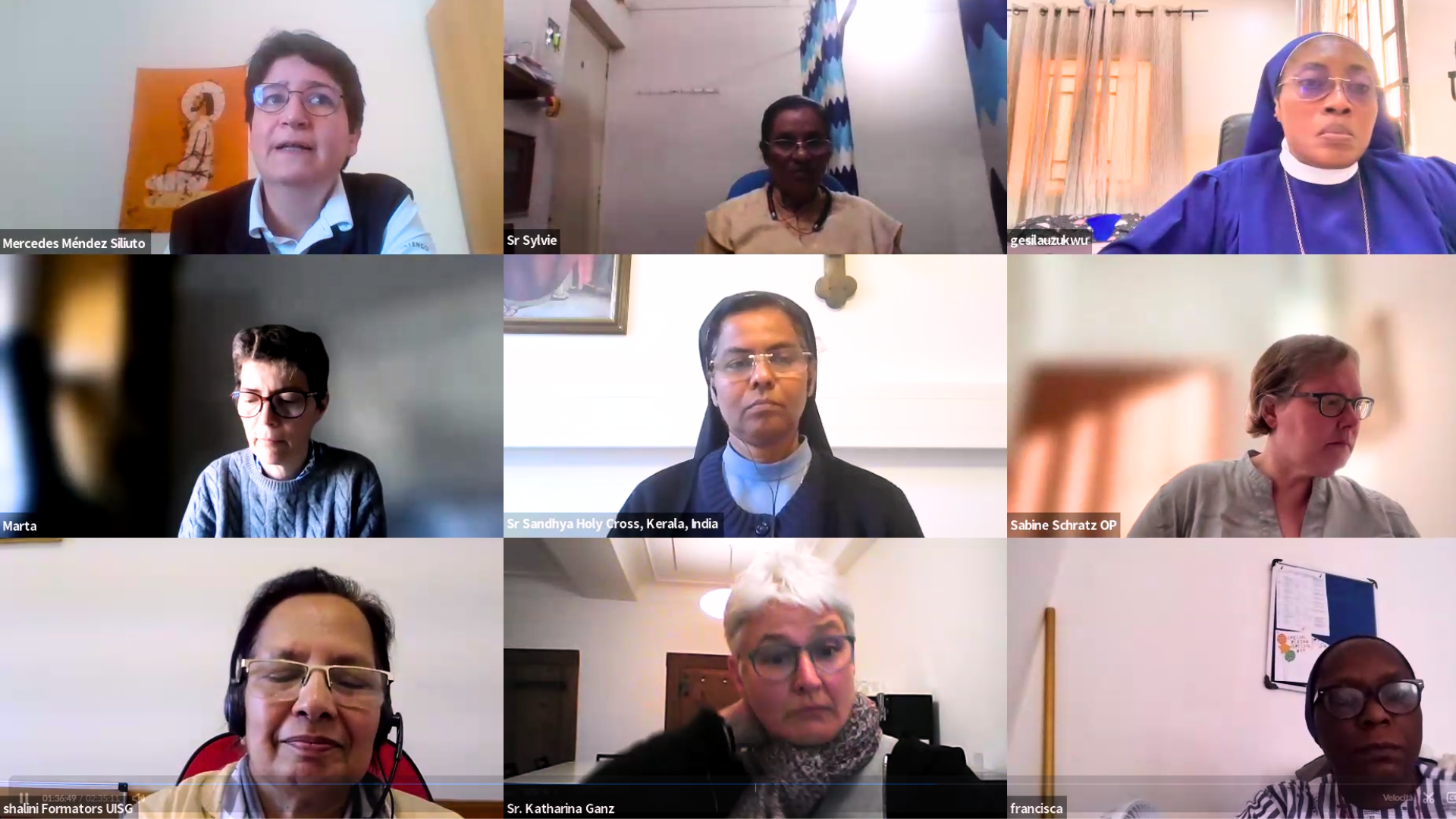
In our latest meeting, as consecrated women and theologians, we engaged with today’s global reality – marked by serious political shifts, increasing conflicts, and deep injustices – seeking to discern God’s call within it.
This is why we began with a contemplative moment: a time of gazing upon the reality of peoples divided by painful inequalities, listening to God’s word. In this space of prayer, we recognized that, even amid confusion and destruction, we continue to receive God’s invitation to listen to the “cry of our brothers and sisters” and to renew our response: “Here I am, Lord.” This way of beginning shaped the entire encounter, grounding it not only in reflection, but in our lived experience and desire of discernment.
During this meeting, we continued our journey as the third cohort of women religious theologians toward the in-person Symposium in June, engaging theologically with key themes from previous sessions, with the the desire to foster deep listening and generative dialogue.
Among these was our call to continue fostering synodality in the Church and in consecrated life, as well as to reflect more critically on authority and obedience within our structures. We recognize that when these are not well understood or safeguarded, they can lead to manipulation and various forms of abuse in the name of a distorted spirituality and faith in God. We also acknowledged how new technologies are increasingly shaping our lives. The question for us is no longer whether to engage them or not, but how to do so authentically, responsibly, and in ways that give life, while avoiding forms of harmful dependency.
Our conversations arise from a deep conviction in the role of religious women asked to be a source of hope amidst brokenness and despair. We are called to heal relationships and to rebuild communion, responding to the wounds caused by injustice and sin – both in us, within our own communities and in society. This leads us not only to examine personal behaviors, but also to reflect critically on systems, cultures, and structures that may cause harm.
Such a path requires a renewed spirituality and deeper theological formation –that enables sisters to discern wisely, recognize healthy and unhealthy dynamics, and act with creativity, responsibility, and freedom.
This encounter reaffirmed that theology needs to be holistic: grounded in the Gospel, open to human experience, to the new challenges and signs of the times. It is a journey that calls for courage, discernment, and a renewed commitment to strengthen a consecrated life that is synodal, attentive to the present reality, safe, just, and life-giving.
In this Lenten journey, we continue to ask Jesus to accompany us on the path to Jerusalem, facing the challenges along the way, trusting that, by sharing in his Cross, we will also share in the promise of the Resurrection.
Paula Jordão, fmvd