
20/08/2026
News
Month That Opened My Eyes and My Heart
Month That Opened My Eyes and My Heart
Since 2015, an intercongregational community of women religious from different countries has been present in Lampedusa, welcoming migrants and building bridges with the local community. In collaboration with the Italian Coast Guard and other organisations on the island, the sisters also accompany the people of Lampedusa, taking part in the life of the parish.
As part of the UISG Migrants in Sicily Project, Sr. Diane Sorin, of the Congregation of the Daughters of the Cross, shares her experience of a month in Lampedusa: an experience that opened her eyes and heart, helping her to recognise the face of Christ and the Gospel’s call to welcome and accompany others with compassion.
When I arrived on the small island of Lampedusa at the end of June 2026, I carried with me the same vague awareness many Canadians have about the Mediterranean migrant crisis. I knew the sea had become a graveyard for countless refugees and migrants fleeing violence, poverty, and exploitation. I knew Pope Francis had visited the island in 2013, calling the world to awaken from its “globalization of indifference.” But I must admit: I did not truly understand.
My month on Lampedusa was not long, yet it was long enough to unsettle me, to teach me, and to invite me into a deeper Christian attentiveness. It was a time of grace, of discomfort, and of profound human encounter. I left the island with a heart both heavy and grateful — heavy with the suffering I witnessed, grateful for the chance to be present in even the smallest way.
Discovering the Harsh Reality Behind the Crossing
Coming from Canada, I have lived far from the daily realities of forced migration. Even during the years I spent in Southeast Asia, the tragedy unfolding in the Mediterranean felt distant. I knew the crossing was dangerous; I knew lives were lost. But I did not know — not really — the depth of suffering endured long before the boats ever reached European waters.
On Lampedusa, I learned about the imprisonment, torture, and systematic human rights violations inflicted on refugees and migrants in Libya. I heard stories of extortion, starvation, and violence so severe that the sea, with all its risks, seemed the only path to hope. I was shocked not only by the cruelty but by the passivity of the world community. How could such suffering persist with so little outrage, so little action?
This new awareness was painful. It stripped away my comfortable ignorance. And yet, as Christians, we know that truth — even difficult truth — is a grace. It calls us to conversion. It calls us to solidarity. It calls us to see the face of Christ in those who suffer, and to ask ourselves what it means to be disciples in a world where so many lives are deemed disposable.
The Ministry of Presence on the Wharf
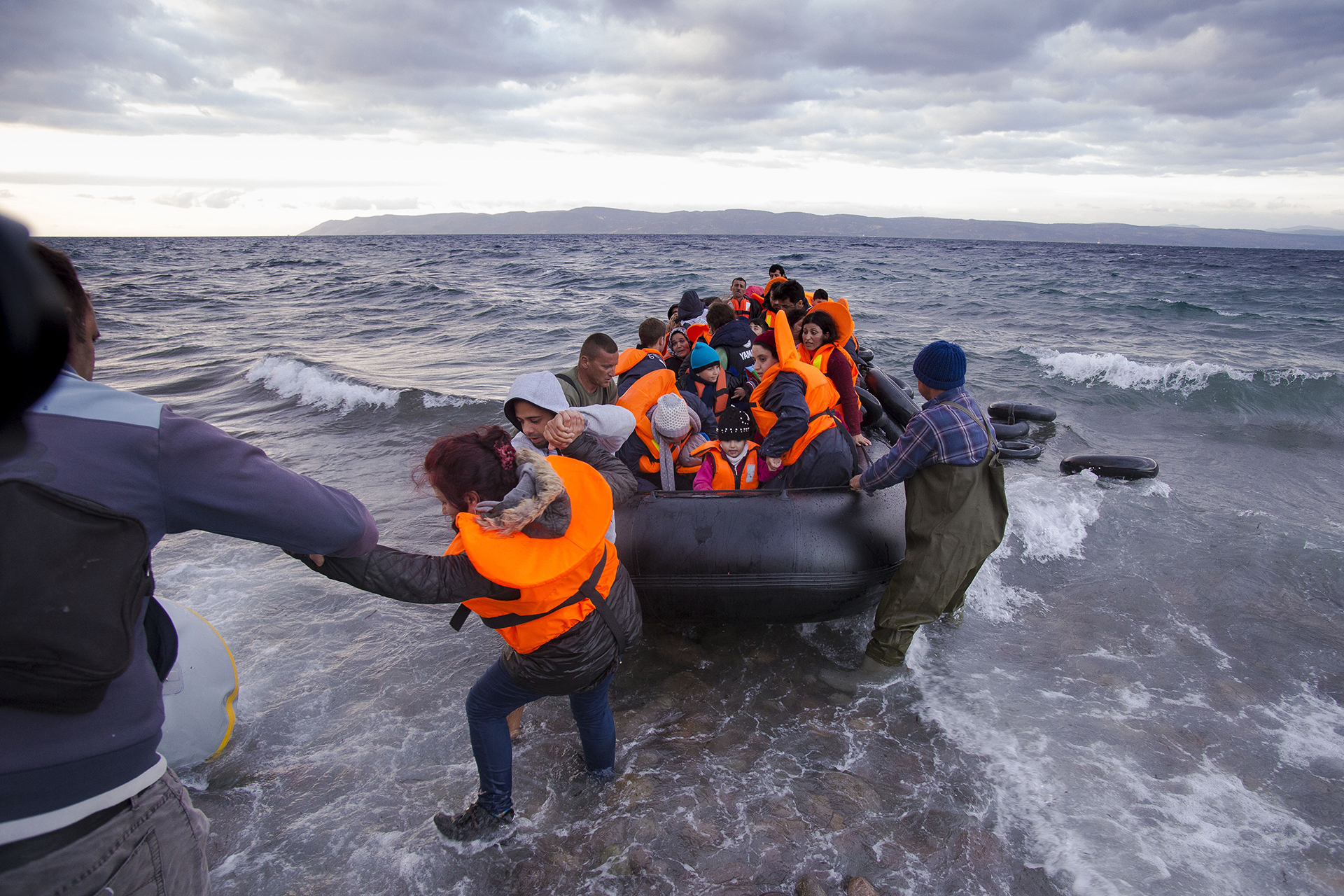
During my stay, I joined an intercongregational community of three sisters whose mission was simple: to welcome arriving migrants at the wharf. Whenever word came that a Coast Guard ship was approaching, we made our way to the harbor. We stood behind the Italian Coast Guard, the European Coast Guard, UNHCR, IOM, Save the Children — all of whom had serious responsibilities and urgent tasks. Our role was different. We were there simply to be a compassionate, human presence.
It felt small. It felt inadequate. And yet, I quickly learned how powerful such simplicity can be.
I remember one group of young men, perhaps in their twenties, who disembarked on a scorching afternoon. They were barefoot, limping, exhausted, and uncertain. Their faces carried the weight of trauma and the unknown future ahead of them. I was tired myself — the heat was relentless — but I tried to call on the best of myself, to offer a smile, a gentle word, a gesture of welcome.
Their response surprised me. Their shoulders relaxed, their eyes softened, they smiled back and a few gave me a light pat on the shoulder. In that moment, I realized that our small presence mattered. For a brief time, they felt seen, appreciated, and welcomed.
This experience reminded me of something we often speak about but easily forget: the quality of presence. In our busy lives, we rush past people, distracted and preoccupied. Yet Christ calls us to be present — truly present — to those we encounter. On that wharf, I rediscovered the sacredness of simple human connection.
Witnessing Indifference — and Examining My Own
One of the most shocking moments of my stay occurred on the wharf. A group of refugees had just arrived, young men wearing heavy sweaters and long pants despite the sweltering heat. They limped along the cement, barefoot, clearly exhausted after their time at sea.
At the same time, another boat entered the harbor — a pleasure craft carrying tourists dancing in their bathing suits, laughing, oblivious to the suffering unfolding only meters away.
The contrast was jarring. It felt like two worlds colliding: one marked by desperation, the other by carefree enjoyment. And yet the two worlds did not see each other.
When Pope Leo came to Lampedusa at the beginning of July to draw attention to the refugee and migrant crisis, many people flocked to the island to attend the Mass and see the Holy Father. But few asked about the refugees themselves. Few seemed concerned about what was and is happening at the end of the harbor.
This indifference disturbed me. But it also made me look inward. Am I attentive to the suffering around me? Do I walk past people in pain, absorbed in my own concerns? Do I fail to notice the quiet cries of those who cross my path?
Lampedusa became a mirror, revealing not only the world’s indifference but my own. It invited me to cultivate a more compassionate gaze, a more attentive heart.
I spent only one month on Lampedusa. I did not witness the massive influx of refugees that occurred in previous years. But what I did experience was enough to change me. It opened my eyes to the harsh realities faced by migrants. It taught me the profound value of simple presence. And it challenged me to confront the indifference — both societal and personal — that allows suffering to remain unseen.
I am deeply grateful to the UISG and to my Congregation for allowing me to participate in this mission. It was a privilege to stand on that wharf, to offer a smile, to witness courage, and to be reminded once again of the Gospel’s call: to welcome the stranger, to see Christ in the vulnerable, and to let our hearts be moved by compassion.
Related News
 Vatican News
Thursday 15 October 2026
100th World Mission Day - “One in Christ. United in mission”
Read
Vatican News
Thursday 15 October 2026
100th World Mission Day - “One in Christ. United in mission”
Read
 News
Thursday 08 October 2026
Sr. Mary T. Barron Appointed President of the Pontifical Mission Societies: A Life Dedicated to the Service of the Gospel
Read
News
Thursday 08 October 2026
Sr. Mary T. Barron Appointed President of the Pontifical Mission Societies: A Life Dedicated to the Service of the Gospel
Read
 News
Friday 18 September 2026
New Leadership Team of the Sisters of St. Joseph of Brentwood
Read
News
Friday 18 September 2026
New Leadership Team of the Sisters of St. Joseph of Brentwood
Read
 News
Monday 14 September 2026
Sr. Ha Dinh's experience at the Women Religious Theologians Symposium in Nemi: “The gathering was like a contemporary Pentecost.”
Read
News
Monday 14 September 2026
Sr. Ha Dinh's experience at the Women Religious Theologians Symposium in Nemi: “The gathering was like a contemporary Pentecost.”
Read
Related Projects and Commissions
International Migrants and Refugees Network
Learn more
Justice, Peace and Integrity of Creation
Learn more
27/08/2026
RAKOTO ZAFY
Les informations sur Lampaderna, m'a aidées, à savoir ce qui se passe dans le monde Merci