02/11/2026
News
Inhabiting Digital Culture: Archbishop Lucio Ruiz Invites Consecrated Life to Rethink Its Mission
Inhabiting Digital Culture: Archbishop Lucio Ruiz Invites Consecrated Life to Rethink Its Mission
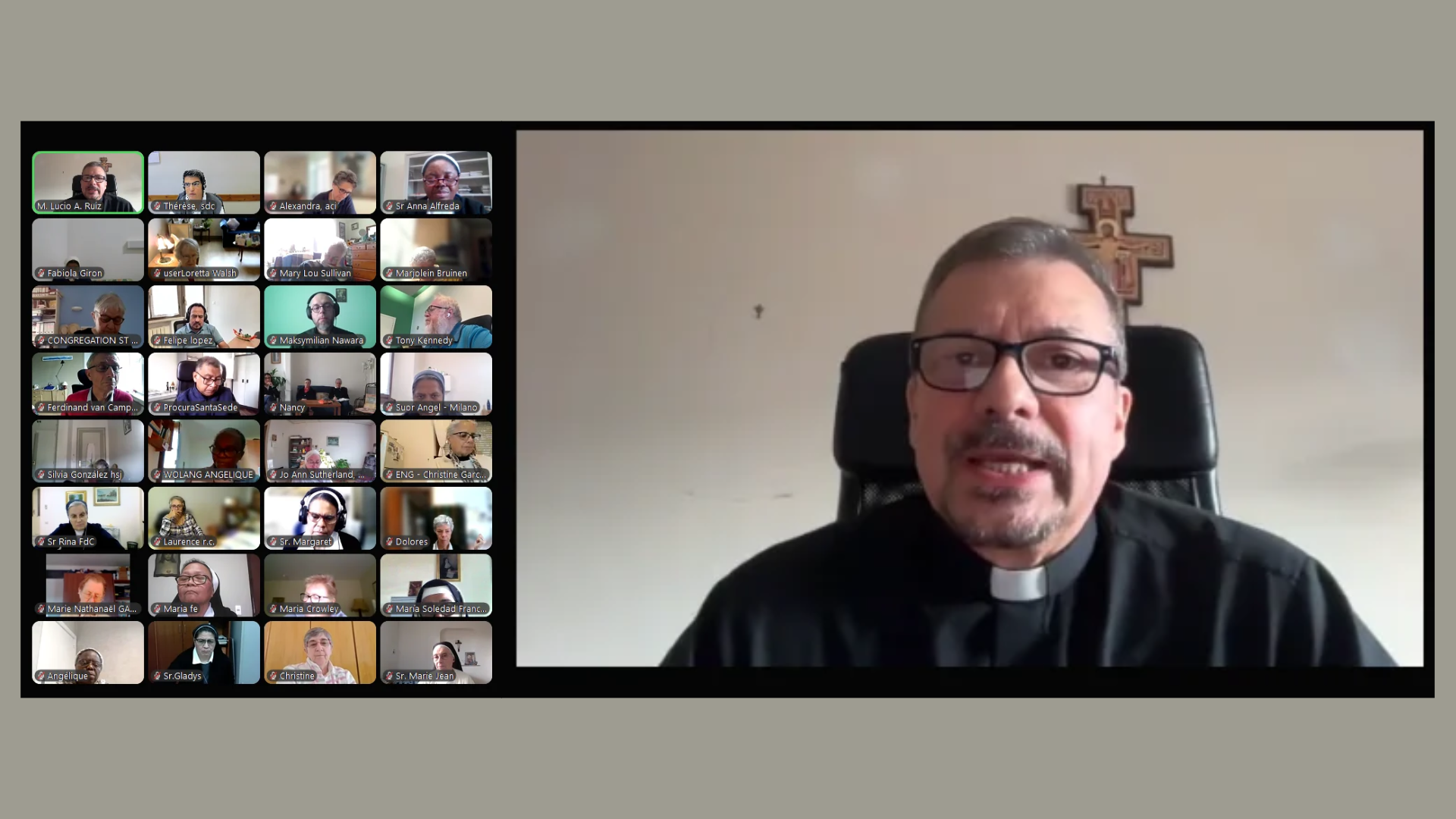
The communication training programme promoted by UISG in collaboration with Multimedia International (MMI) and USG continues this year. On 23 October 2026, approximately 400 participants from different parts of the world attended the webinar “Digital Culture: Towards Effective Inculturation”, dedicated to the cultural transformations of the digital age and the challenges they pose for the mission of consecrated life.
The reflection was led by Archbishop Lucio Ruiz, former Secretary of the Dicastery for Communication, who invited participants to move beyond a purely instrumental view of digital technology, recognising it as a cultural environment to be understood and inhabited in order to rethink how consecrated life can be present and bear witness in today's world.
Digital Culture: A Cultural Change, Not Just a Technological One
Drawing on an expression used by Pope Francis, Archbishop Ruiz recalled that we are not simply living through an era of change, but a true change of era. Digital culture, he explained, does not concern only younger generations: it affects society as a whole and transforms the ways people learn, communicate, build relationships, participate in community life and experience their faith.
For this reason, the Church's presence in digital environments cannot be reduced to the dissemination of religious content. It is essential to understand their languages, dynamics and patterns of interaction, remembering that behind every screen are real people with questions, hopes and spiritual needs.
The Challenge for Charisms
Every charism emerges as a response of the Holy Spirit to the needs of a particular historical moment. Similarly, Archbishop Ruiz observed, consecrated life today is called to read the signs of the times and find new ways of communicating the richness of its mission.
He identified three priority areas. In initial and ongoing formation, rules governing the use of technology are not enough: what is needed is education in freedom, responsibility and discernment, helping younger generations to live out their religious identity online as well. In vocation ministry, congregations are invited to reflect on their ability to reach young people where they live and seek answers to life's fundamental questions. An authentic digital presence that shows the daily life of communities, prayer, fraternity and service can become a powerful witness to the beauty of consecrated life. The third area concerns the accompaniment of digital missionaries.
Accompanying, Discerning and Forming
For those who feel called to digital mission, the response to risks and difficulties cannot be prohibition or mistrust. Archbishop Ruiz proposed pathways of communal discernment, spiritual accompaniment and integral formation.
Referring to the work of Study Group 3 of the synodal process, dedicated to mission in the digital environment, he outlined three directions: integrating digital mission into the ordinary life of the Church, accompanying digital missionaries, and promoting formation that brings together technical, theological, spiritual and synodal dimensions. Digital mission, he added, should not be separated from community life and personal encounters, but should foster authentic relationships and build bridges with in-person experiences.
A New Frontier for Mission
In conclusion, Archbishop Ruiz invited congregations to consider digital culture as a concrete dimension of their mission. The challenge is not simply to be present on digital platforms, but to inhabit them in a Gospel-inspired way, characterised by listening, closeness, authenticity and the ability to build communion. From this perspective, charisms can be placed at the service of those who inhabit the digital continent, particularly people experiencing loneliness, vulnerability or spiritual searching.
One question remains open for all congregations: how can they make their charisms understandable and meaningful to people today, speaking their language and meeting them where they are?
Related News
 News
Thursday 14 May 2026
The Face and the Voice: Our Prophetic Mission in the Age of Artificial Intelligence
Read
 News
Saturday 02 May 2026
Consecrated Life in Dialogue with Artificial Intelligence: Safeguarding the Human in the Digital Age
Read
 Vatican News
Tuesday 03 March 2026
An Important Step in the Synodal Journey
Read
 Vatican News
Tuesday 03 March 2026
Living the Digital World: Social Media, Community and Vocation Promotion
Read
Related Projects and Commissions
Communicating Religious Life
Learn more