03/09/2026
Vatican News
Caring for Our Common Home: A Responsibility Born of Faith
Caring for Our Common Home: A Responsibility Born of Faith
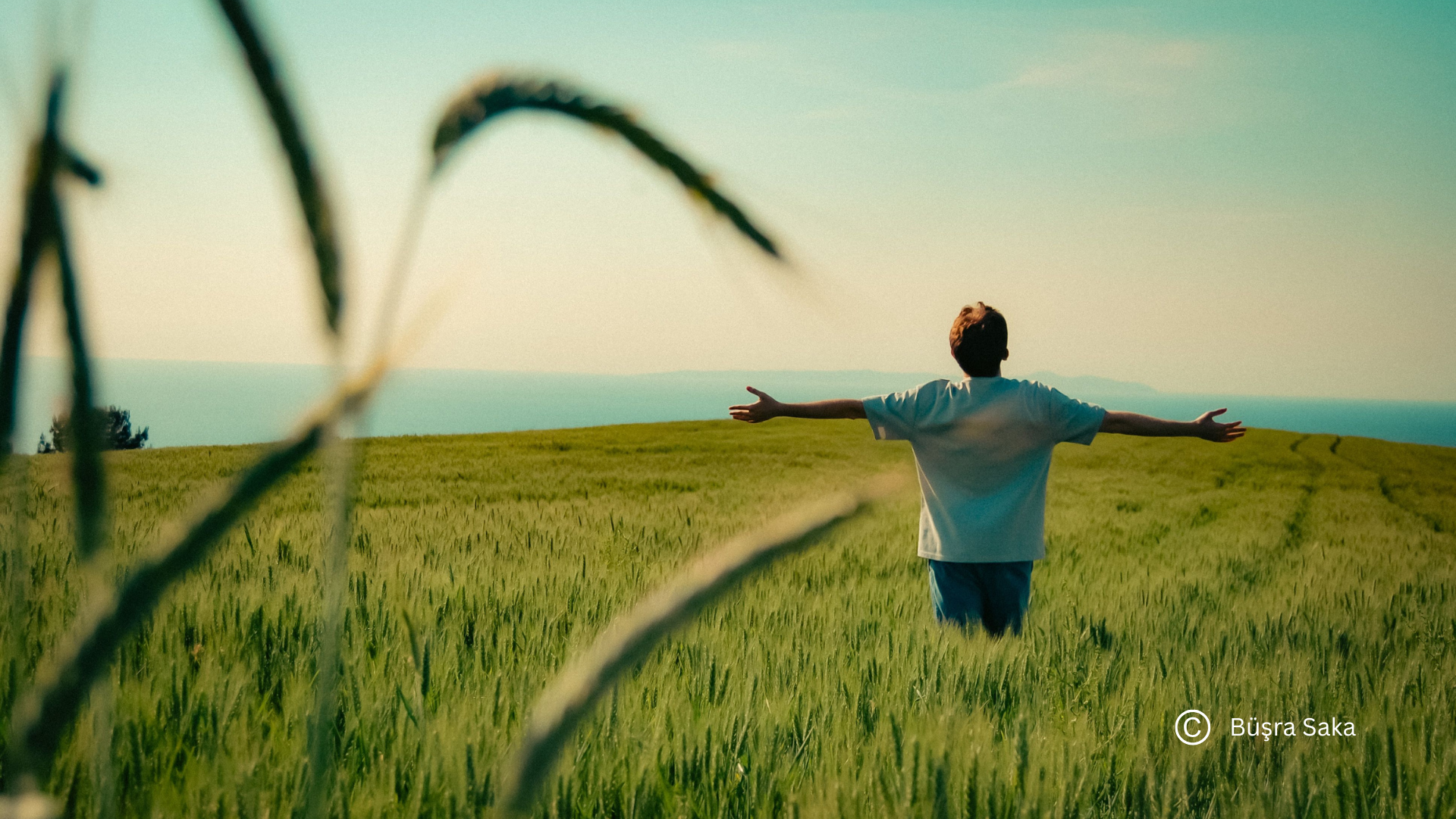
Caring for our Common Home is not simply an environmental issue. It is a profoundly human, spiritual and theological matter that concerns our relationship with God, with others and with the world we inhabit.
This is the perspective of the new document of the International Theological Commission, Caring for Our Common Home: A Responsible and Fraternal Response to the Triune God, published on 21 August 2026. The text explores the theme of creation in the light of faith in the Triune God and offers a theological foundation for our responsibility to care for creation.
Following the path opened by Laudato si’, the document reminds us that caring for our Common Home does not arise solely from the urgency of the ecological crisis, but belongs to God’s very plan for creation. For this reason, our response cannot be limited to technical solutions: it also requires cultural transformation and genuine spiritual conversion.
Everything Is Connected
One of the central themes of the document is interconnectedness. The human person lives within three fundamental relationships: with God, with our neighbour and with creation. When one of these relationships is wounded, the others are also affected.
The deterioration of our Common Home therefore also has a moral and spiritual dimension. Harming creation means damaging our relationship with God and with others, particularly with those who are poor and vulnerable and with future generations.
For this reason, the document calls us to listen together to the cry of the Earth and the cry of the poor, recalling that the consequences of the environmental crisis fall most heavily on those who have fewer resources to face them.
Stewards and Servants of Creation
The Christian perspective does not consider the human person to be the absolute master of nature. Rather, we are called to be stewards and servants of creation, recognising that creation does not belong to us but has been entrusted to our care.
To care, then, means to protect, cultivate and help life to flourish. The document uses a particularly meaningful image: making the Earth a garden habitable for all, where life, fraternity and solidarity can grow.
An Ecological and Spiritual Conversion
Responding to the ecological crisis requires a genuine ecological conversion, capable of transforming not only our behaviour, but also the way we see the world and our way of life.
Reverence for creation, responsible care, simplicity, listening to the poor, solidarity and concern for future generations thus become concrete expressions of faith. Even the way we use resources and consume can become a space for responsibility and inner freedom.
The document also calls for collaboration among institutions, science, civil society and religions. Caring for our Common Home is a shared task and can become an important space for ecumenical and interreligious dialogue.
For religious life, this reflection represents a concrete invitation to bear witness to a culture of care through community lifestyles, simplicity, mission, solidarity with the most vulnerable populations and the capacity to build networks of collaboration.
The document concludes with a perspective of Christian hope. This is not superficial optimism, but a hope that strengthens responsibility and calls us to act. Creation, in Christ, is not destined for destruction, but for transformation and fulfilment.
Caring for our Common Home therefore means receiving creation as a gift, caring for one another and responsibly embracing the place God has entrusted to us in the world.
04/10/2026
Dianne Doyle
Can you please send me the English translation? This sounds like a wonderful message that all of us need to embrace.
01/10/2026
Clare Kenny
. Yes everyone has responsibility and we all need constant rerminders as events in the world change rapidly.
18/09/2026
Andre Ngoc Nguyen
So glad to have common effort to care for our Common Home
16/09/2026
Rosa Le Thi Bong
I am grateful and wished to read the the document below; Caring for Our Common Home: A Responsible and Fraternal Response to the Triune God Could you please send the English version one. Thanks a lot! God bless you.
16/09/2026
Rev David Coleman
Whilst I broadly welcome this document, it's regrettable to see a return to the 'stewardship' language of the twentieth century, which, in global north English-speaking circles, encourages a non-relational detachment from the rest of creation, rather than a listening and responsive safeguarding. I'm speaking from the perspective of an ecumenical environmental ministry, working with local churches including RC, in Scotland.
16/09/2026
Silvia
Il Posto che Dio ci ha affidato nel monde.
16/09/2026
Silvia
Il Posto che Dio ci ha affidato nel monde.
16/09/2026
Akhlesh Lakhtakia
Ecocide is definitely a sin. Glad that the Catholic church has finally declared it to be so.
14/09/2026
Gillian Hagamen
So glad to see this important update!
14/09/2026
Yanick Luc
Ces informations sont très essentielles pour aborder autrement la réalité
12/09/2026
Rasmyne
Agradeço muitíssimo a matéria, vocês foram o único local que eu localizei a fonte original, todos os outros foram postagens de instagram deturpando a verdade do texto e sem citar as fontes.
11/09/2026
Bernadette Delobel
Merci
11/09/2026
Sr Chandani Jayasuriya
Thank you for sharing the above article. As a congregation, we have taken caring for our common home one of our priorities. Therefore, I am interested in reading further. Thank you
10/09/2026
Tahira sarwar
Wonderful to realize that I carry a huge responsibility to care for our common home and grow in the sense of belongingness. Thank you
10/09/2026
Sr. Lumen Gloria Dungca, OSB
thank you for this article: "Caring for Our Common Home: A Responsibility Born of Faith" I will be sharing it to our 18 communities.
10/09/2026
trinitairesbm@gmail.com
Peut-on avoir le texte en français svp?
10/09/2026
Nancy Brown
thank you for the work you do.
09/09/2026
Wilma
Thank you.
09/09/2026
Theodosie
J'aimerais récevoir régulièrement les Nouvelles pour ma formation permanente aux thèmes d'actualités de l'église et du monde. Merci
09/09/2026
Rosa Maria de Castro
Gracias por las informaciones
09/09/2026
Carmenza Avellaneda
Importante documento desde la erspectiva teológica, espiritual y de compromiso con lla casa común.
09/09/2026
Nancy Brown
looking forward to reading the full document.
Related News
 Vatican News
Thursday 15 October 2026
100th World Mission Day - “One in Christ. United in mission”
Read
Vatican News
Thursday 15 October 2026
100th World Mission Day - “One in Christ. United in mission”
Read
 Vatican News
Thursday 01 October 2026
Pray with the Pope: For mental health ministry
Read
Vatican News
Thursday 01 October 2026
Pray with the Pope: For mental health ministry
Read
 Vatican News
Wednesday 23 September 2026
The 112th World Day of Migrants and Refugees: “Even Just One of These Children”
Read
Vatican News
Wednesday 23 September 2026
The 112th World Day of Migrants and Refugees: “Even Just One of These Children”
Read
 Vatican News
Thursday 17 September 2026
A Journey of Hope: Sixty Years of Nostra Aetate
Read
Vatican News
Thursday 17 September 2026
A Journey of Hope: Sixty Years of Nostra Aetate
Read
08/10/2026
Hna. Graciela Trivilino
Paz y Bien! Gracias de todo corazón por animarnos y acompañarnos!!!!