01/02/2026
Vatican News
Canossian sisters empowering Maasai girls to rise above tradition and poverty
Canossian sisters empowering Maasai girls to rise above tradition and poverty
After the journey that accompanied us towards the Jubilee of Consecrated Life (8–12 October 2025), we wish to continue walking in the path of Hope, allowing ourselves to be inspired by new testimonies from the Sisters Project of Vatican News, which we will publish weekly on our website.
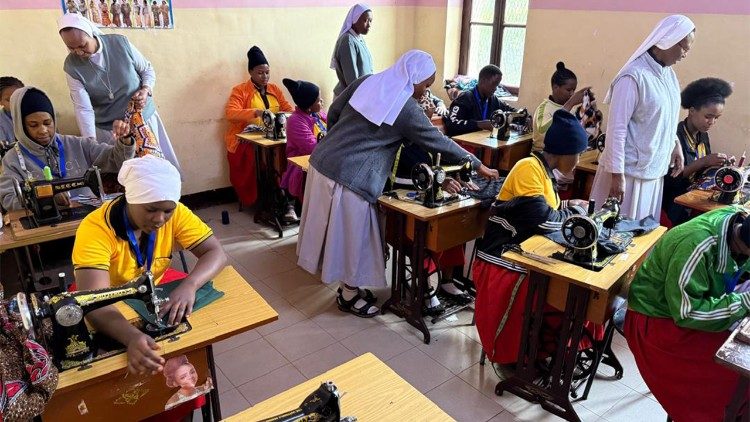
This week we share the story of the Canossian Sisters, Daughters of Charity, in the Arusha region, who are pursuing their mission to protect young girls from harmful cultural practices by offering them education and the ability to choose their own future.
In the Maasai community, cultural norms continue to take away girls' childhoods. Most girls aged 11 to 13 undergo female genital mutilation (FGM) and are forced into marriages, often with much older men, in exchange for cattle or cash.
Once married, these girls lose their rights to education, freedom, or divorce. They become property of their husbands' families, take on heavy household tasks, and bear multiple children, regardless of their health or consent.
Many live in extreme poverty while clinging to strong cultural traditions despite modernization.
Changing the narrative: Canossian Sisters' mission
The Canossian Daughters of Charity, founded in 1808 by St. Magdalene of Canossa in Italy, dedicate their lives to helping the poor and marginalized.
In Arusha, among other missions, they focus on empowering girls trapped in cycles of cultural oppression.
Recognizing the urgent need for action, the Canossa Sisters set up the St. Magdalene Training Centre in 1966.
Led by Sister Levina Mzebele, FDCC, the center offers girls aged 12 to 30 a second chance through vocational skills training in tailoring, cookery, soap-making, and other income-generating trades. Graduates receive free sewing machines to help them start small businesses, gain financial independence, and reclaim their futures.
Theresia’s story: from extreme poverty to opportunity
Now, 34-year-old Theresia Mnyampanda, is a remarkable example of transformation and resilience. Once living in poverty, she now owns a successful tailoring business and employs ten young women, five of whom she personally trained.
“She has transformed from poverty to economic independence,” said Sister Levina. “Theresia is now a leader, a mentor, and an inspiration.”
Theresia’s journey began in a humble mud home, a house of few rooms with large family. Severe poverty kept her from pursuing more education until she met the Canossa sisters, who enrolled her in their center and provided free education.
After excelling in her studies, Theresia worked at the same center for several years. During that time, she saved money to start her own business. The sisters gifted her a sewing machine, which marked the start of her entrepreneurial journey.
Today, she owns over ten sewing machines and runs her own center, where she trains girls from disadvantaged backgrounds and hires five of them to make and sell clothing.
“I appreciate the sisters for transforming me from dust to glory,” Theresia says. “They taught me discipline, contentment, and the importance of avoiding greed. I learned that success comes through effort, prayer, and perseverance.”
The work ethic she developed has been invaluable. It has helped her become self-sufficient, start her own business, and support others.
She now offers free sewing lessons to three impoverished children and has helped her younger sibling complete secondary school and attend university. Together, they have uplifted their family by building a sturdy brick and iron-sheet house.
“I am grateful to the Sisters,” Theresia reflects. “I am no longer a burden to society; now I manage my life responsibly and give back to others. This change has truly been a blessing.”
Need for a safe space
Despite these successes, challenges remain. A lack of hostel facilities forces many girls to walk to the sisters’ St. Magdalene Training Centre long distances every day, putting them at risk of abduction and forced marriage. “Sometimes we enroll 50 girls, but only 15 to 25 manage to graduate,” said Sr. Levina.
“Without a safe place to stay, they are pulled back into tradition,” stressed Sr. Levina.
To address this, the Canossian Sisters aim to build a hostel for at-risk girls, expand the training center, increase enrollment, and introduce more empowerment programs.
The power of educating a girl
“When you educate a woman, you give her the power to change her life and that of her community,” Sr. Levina emphasized.
An educated woman will know her rights, choose her partner, avoid harmful traditions like FGM, educate her children, support her family, and transform her community.
The Canossian Sisters' mission is more than charity; it’s a movement for change. These girls, once destined for hardship, are now agents of change who are challenging norms, reshaping futures, and creating legacies of empowerment.
Through love, education, and opportunity, the Canossian Sisters are not just saving lives—they are rewriting destinies.
Article by Sarah Pelaji, Vatican News
02/02/2026
Marie Murphy
God’s choicest blessings on the wonderful mission your Sisters perform for some of the most vulnerable women in our world…. Marie Murphy, RSM.
02/02/2026
Marie Murphy, RSM.
The Canosa Sisters enable an amazing ministry Especially for women and girls, to be performed…. Thank you Sisters..
Related News
 News
Tuesday 15 September 2026
The International Congress on Pastoral Care in School and Universities
Read
News
Tuesday 15 September 2026
The International Congress on Pastoral Care in School and Universities
Read
 Vatican News
Thursday 10 September 2026
Bishops and Consecrated Life: New Proposals for More Synodal Relationships
Read
Vatican News
Thursday 10 September 2026
Bishops and Consecrated Life: New Proposals for More Synodal Relationships
Read
 Vatican News
Thursday 03 September 2026
Caring for Our Common Home: A Responsibility Born of Faith
Read
Vatican News
Thursday 03 September 2026
Caring for Our Common Home: A Responsibility Born of Faith
Read
 Vatican News
Tuesday 01 September 2026
Pray with the Pope: For the care of water
Read
Vatican News
Tuesday 01 September 2026
Pray with the Pope: For the care of water
Read
05/02/2026
Gabriela
Molto bella questa testimonianza,le Canossiane del mio paese hanno significato molto nella mia vita,da bambina alla scuola materna,e nella giovinezza come formazione spirituale, sociale e artigianale.Durante le vacanze scolastiche c'era la scuola di lavoro e ho imparato a ricamare,cucire anche usando la macchina da cucire.Riesco a fare molte cose senza dover andare dalla sarta per le varie riparazioni...Ho un bellissimo ricordo delle suore del mio paese che in quegli anni hanno operato sempre con amore tra di noi. Purtroppo con il calo di vocazioni non ci sono più qui ,a Trento conosco suor Daniela Rizzardi,molto attiva con la scuola Maddalena di Canossa. Grazie di tutto!