25/11/2026
Noticías
Walking Together Toward Unarmed and Disarming Peace: The UISG–USG Joint Assembly in Sacrofano
Camminare insieme verso una pace disarmata e disarmante: a Sacrofano l’Assemblea congiunta UISG–USG
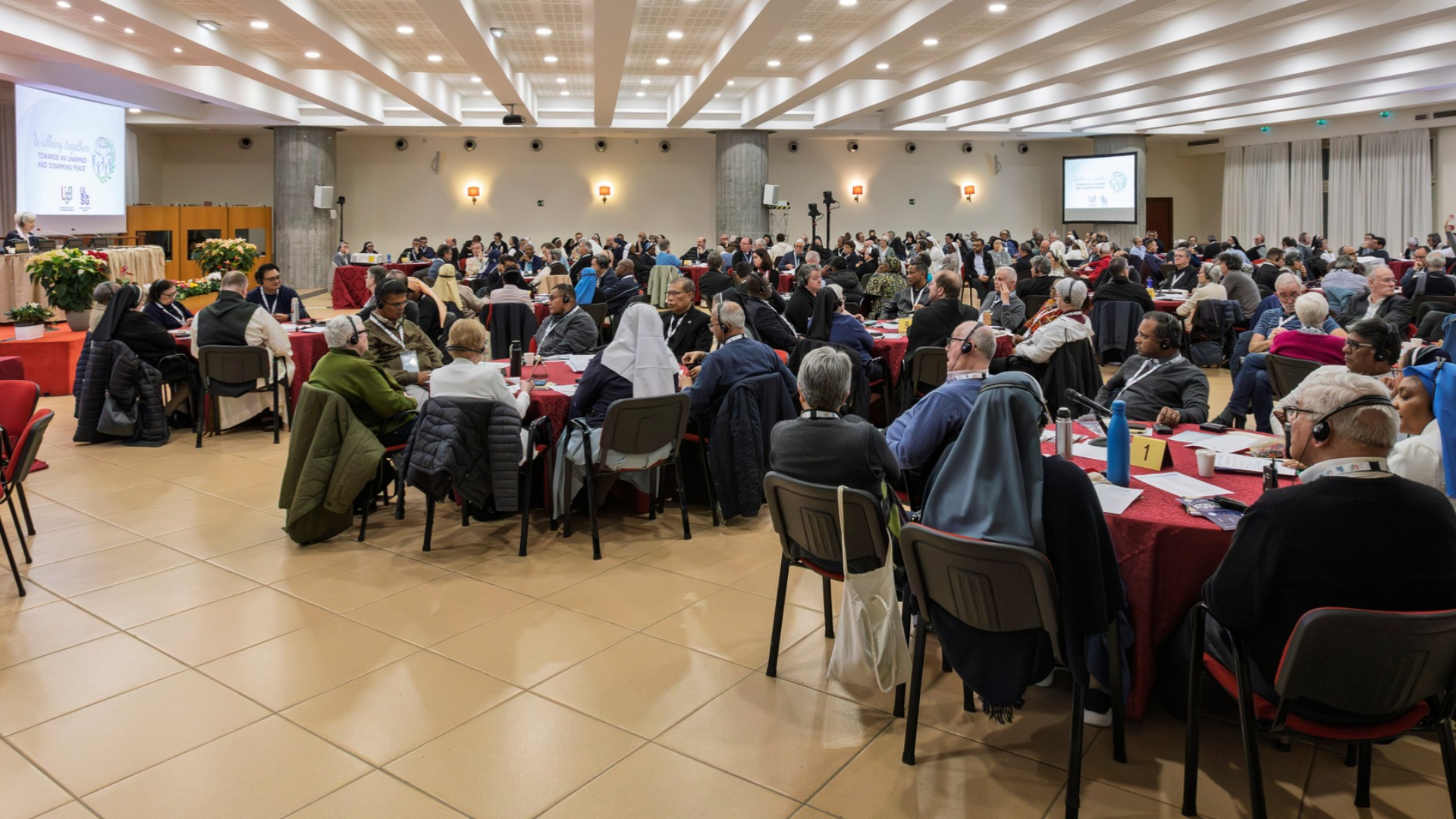
“What would an ‘unarmed and disarming’ way of exercising leadership look like in our congregations?” Sr. Teresia Wamuyu Wachira, CJ, put this question to more than 250 women and men superiors general from around the world, who gathered at the Fraterna Domus in Sacrofano from 25 to 27 November 2026 for the second Joint Assembly of the International Union of Superiors General (UISG) and the Union of Superiors General (USG).
In her opening remarks, Sr. Oonah O’Shea, NDS, president of UISG, expressed the hope that the two Unions could be “together, a voice in the world for a peace that begins to transform.” Fr. Arturo Sosa, SJ, president of USG, recalled the four pillars of peace identified by Saint John XXIII in Pacem in terris: truth, justice, freedom and love. The opening remarks were followed by a prayer led by Sr. Dolores Lahr, CSJ, a member of the UISG Executive Board.
In her morning address, Sr. Teresia, co-president of Pax Christi International, evoked the gesture of taking off one’s shoes to honour those who had lost their lives or been forced to leave their homes because of violence. She then invited those who lead congregations to recognise what can stand in the way of listening: attachment to one’s position, fear of losing material security, and the rigidity of believing that one’s own way is the only possible one. Her question guided the conversations at the tables and the subsequent plenary discussion.
“Promoting justice is reflected on our calendars—in how we allocate our time and personal care.” In the afternoon, Sr. Sheila Kinsey, FCJM, coordinator of Integrity for Nonviolence, drew attention to a choice every community makes each day: whom and what to make time for. She recalled the experience of older people on fixed incomes for whom a rent increase threatened to make their housing unaffordable. Her congregation helped develop a legislative response. The example showed how paying attention to those affected by a decision can help change the rules that shape it.
In the afternoon working groups, participants shared experiences and proposals for practising nonviolence in prayer, in community relationships and in their ministries. The proposals were brought back to the plenary before the celebration of the Eucharist, presided over by Fr. Arturo Sosa.
Two images remain from the first day: shoes taken off in memory of those who have suffered violence, and the calendar in which people decide whom to make time for. Together, they point to a responsibility of those who lead: to make room for the people most affected by their decisions and let what they hear shape the choices of the community.
Sr. Cristina Valea Sobrino
UISG Communications Office
News relacionadas